25 November 2026
How to choose a pendant for your chain
To choose a pendant, start with the shape you want to wear every day, then make sure it suits the chain it will hang from. The pendant's loop, called the bail, has to fit over the chain, and the chain has to be strong enough to carry it. Get those two right and the rest is down to taste.
What shapes can you choose from?
Most pendants fall into a few groups. Knowing which one you are after makes the choice much shorter.
- Crosses: the most common shape, from plain polished metal to crosses covered in stones.
- Symbols: shapes such as an ankh or a lightning bolt, which say something without words.
- Letters and names: made to order with your own initials, name or number.
A plain shape goes with almost anything. A stone-set shape is the piece people notice first, so it works best with plain chains around it.
Plain or stone-set?
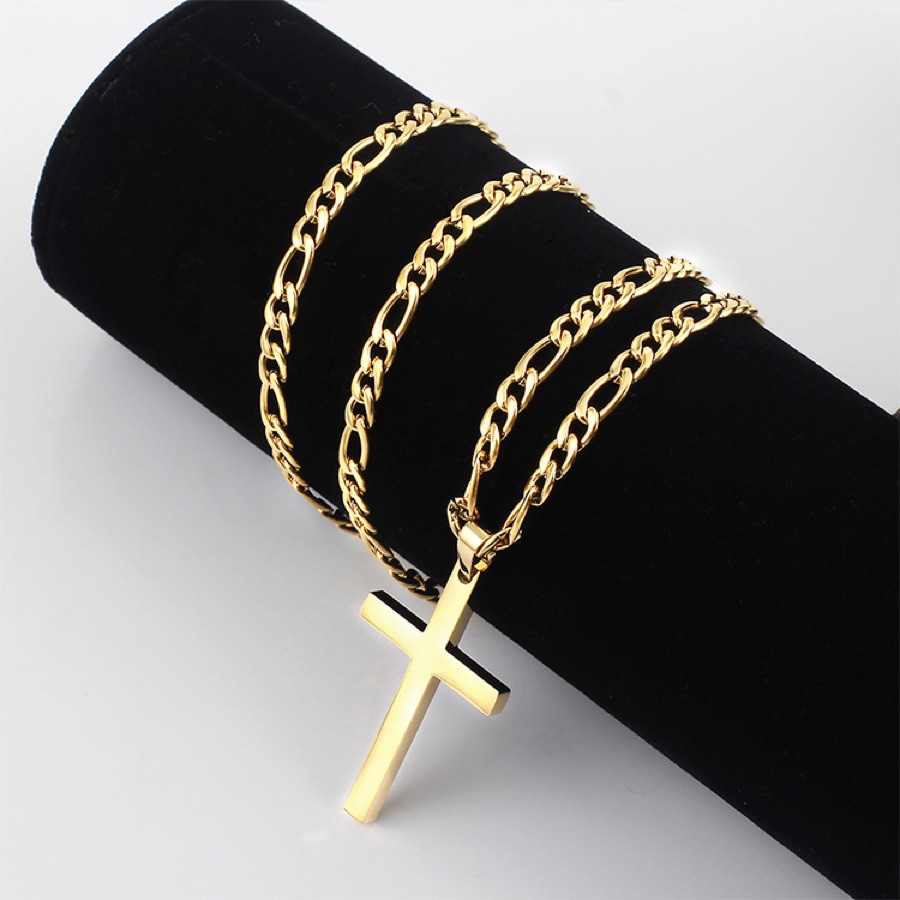
A plain pendant is easy to wear every day and sits quietly with other jewellery. Our Plain Cross Necklace is a polished cross on a Figaro-style chain, in gold-tone, gunmetal black or silver-tone, listed by our supplier as titanium steel.
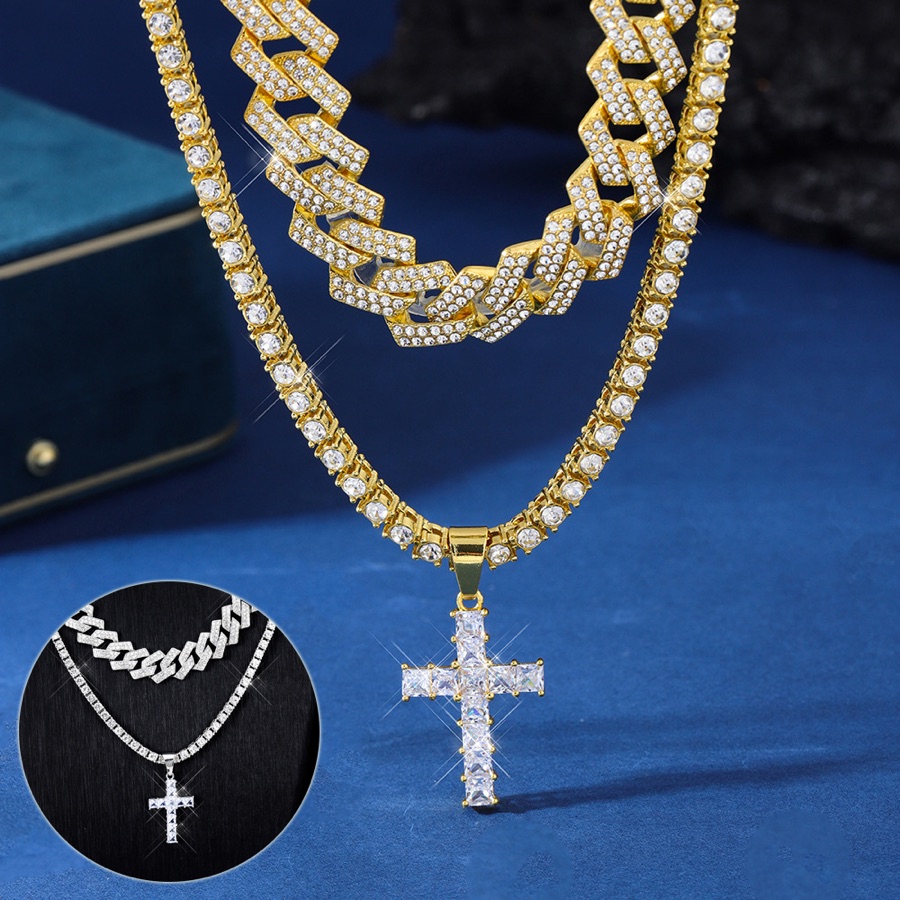
A stone-set pendant catches the light and becomes the centre of the look. Our Stone-Set Cross Pendant is covered in clear rhinestones on plated zinc alloy. You can buy it on its own, with a tennis chain, or with a tennis chain and a Cuban chain.
How big should a pendant be?
Size is about balance. A small pendant suits a slim chain and a close fit at the collarbone. A larger pendant needs a longer chain so it has room to hang on the chest, and a chain wide enough to look in proportion.
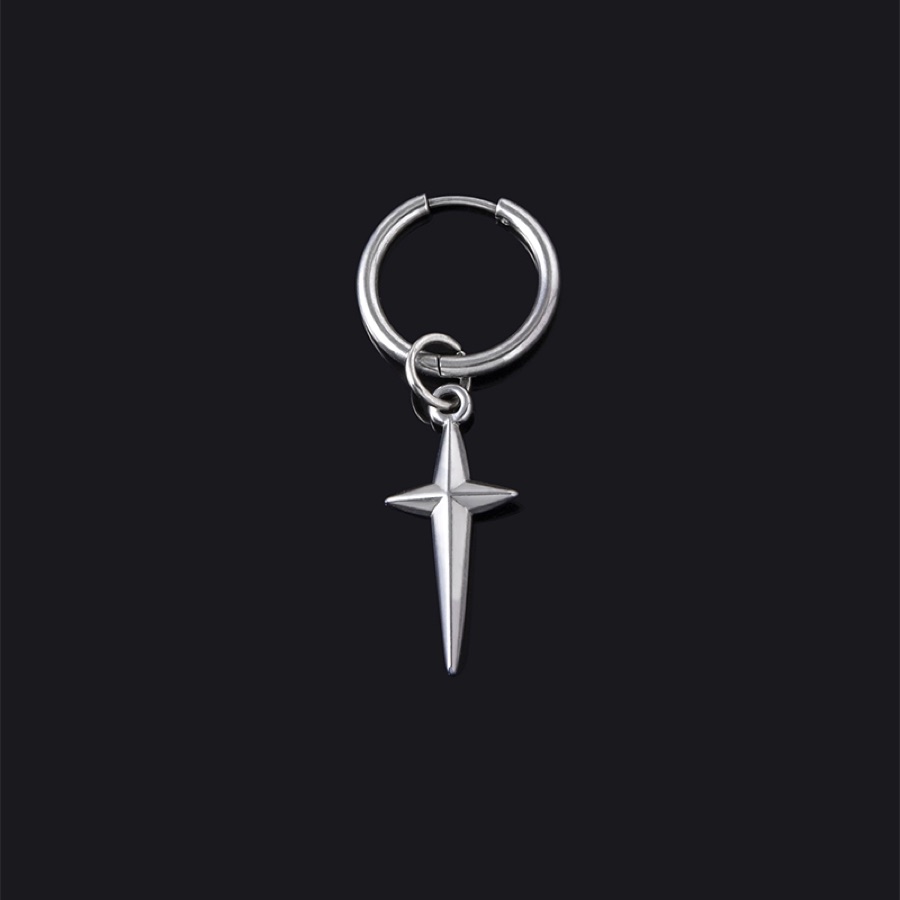
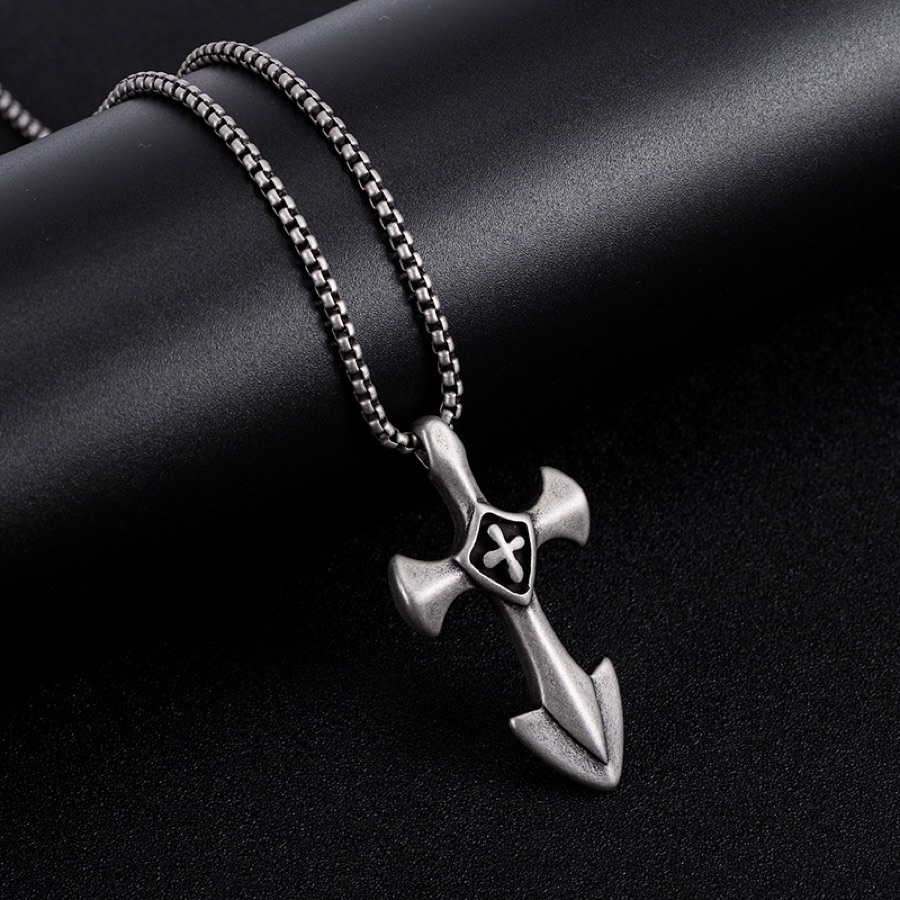
Check the size in the listing before you order, and hold a ruler against your chest to picture it. Our Dagger Cross Pendant Necklace, for example, measures 45 x 28 mm and comes on a box chain. It is listed by our supplier as stainless steel, in a silver-tone finish.
Will a pendant fit my chain?
This is the question most people forget to ask. Look at two things.
- The bail: the loop at the top of the pendant must be wider than the chain, and wide enough for the clasp to pass through, or you cannot thread it on.
- The chain: a heavy pendant on a very fine chain pulls the chain into a sharp V and puts strain on the links and clasp. Match the weight of the chain to the weight of the pendant.
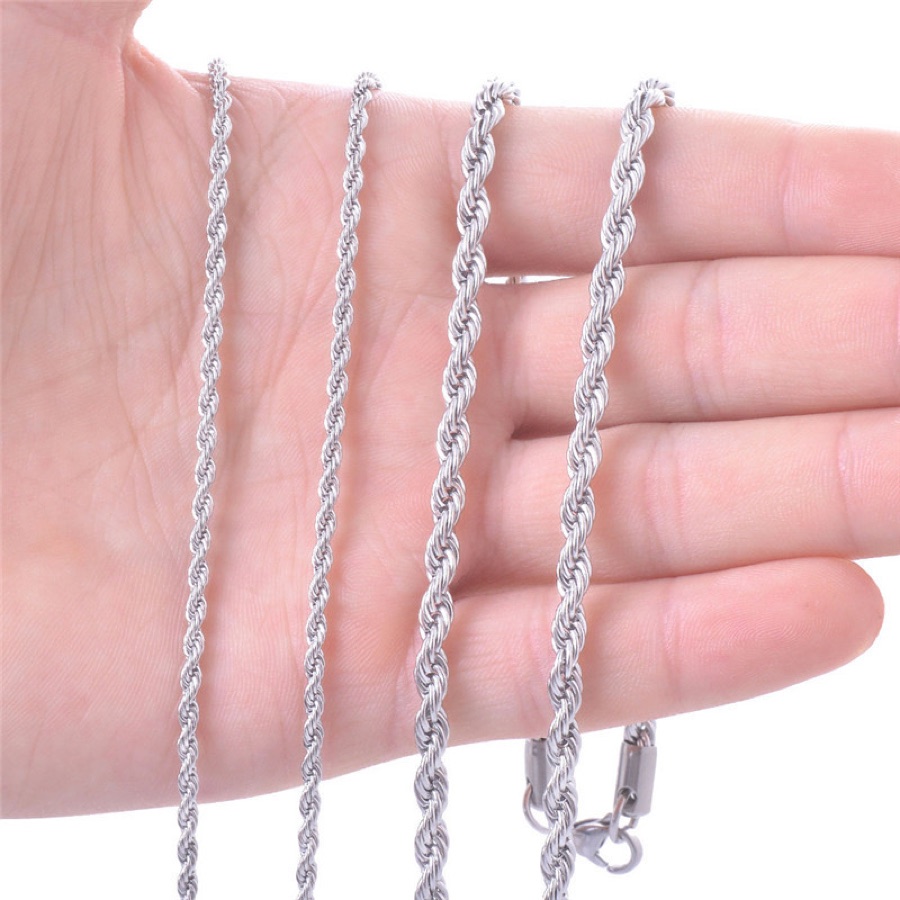
A round chain, such as a rope chain, lets a pendant slide along it and settle at the centre. A flat chain holds it more firmly. Our guide to chain styles explained shows the difference.
Should you buy the pendant with a chain or on its own?
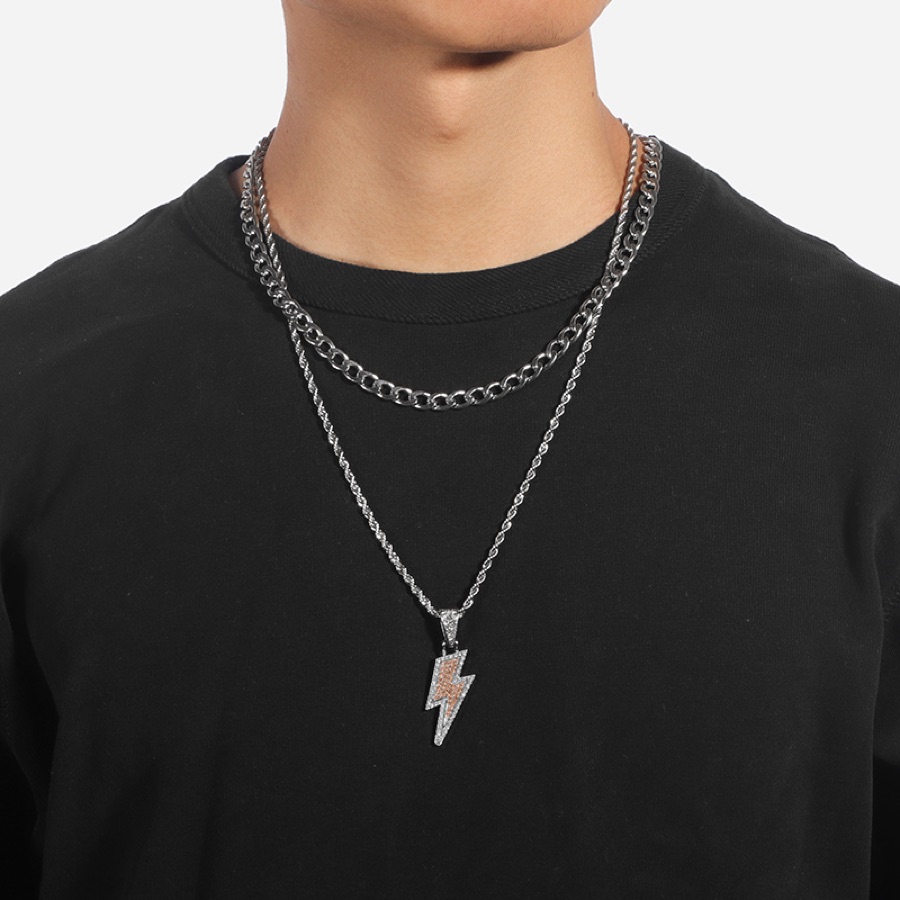
Buying the two together is the simplest way to know they fit. Some of our pendants come with a chain, and some give you the choice. Our Lightning Bolt Pendant is a small bolt set with clear stones, sold on its own or on a 3mm chain in 45cm, 50cm or 60cm.
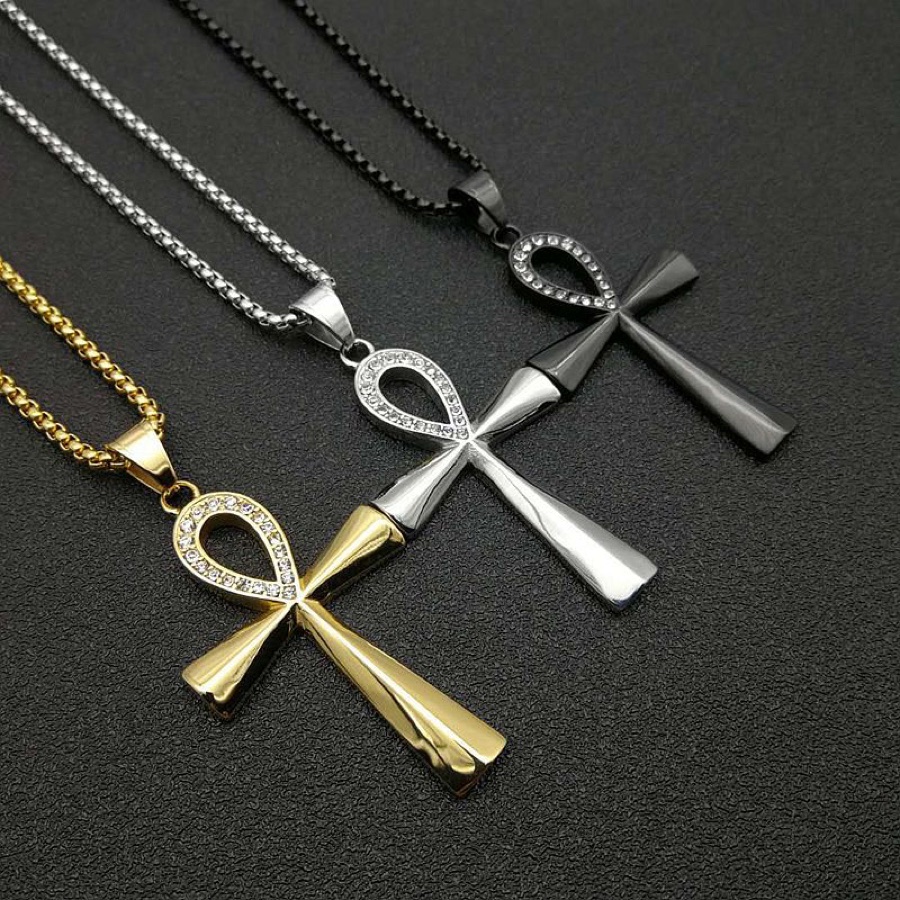
Other pieces are sold as the pendant only. Our Stone-Set Ankh Pendant comes without a chain, in black, gold-tone or silver-tone, so you pair it with a chain you already own or buy one separately. Always read the listing to see whether a chain is included.
What chain length suits a pendant?
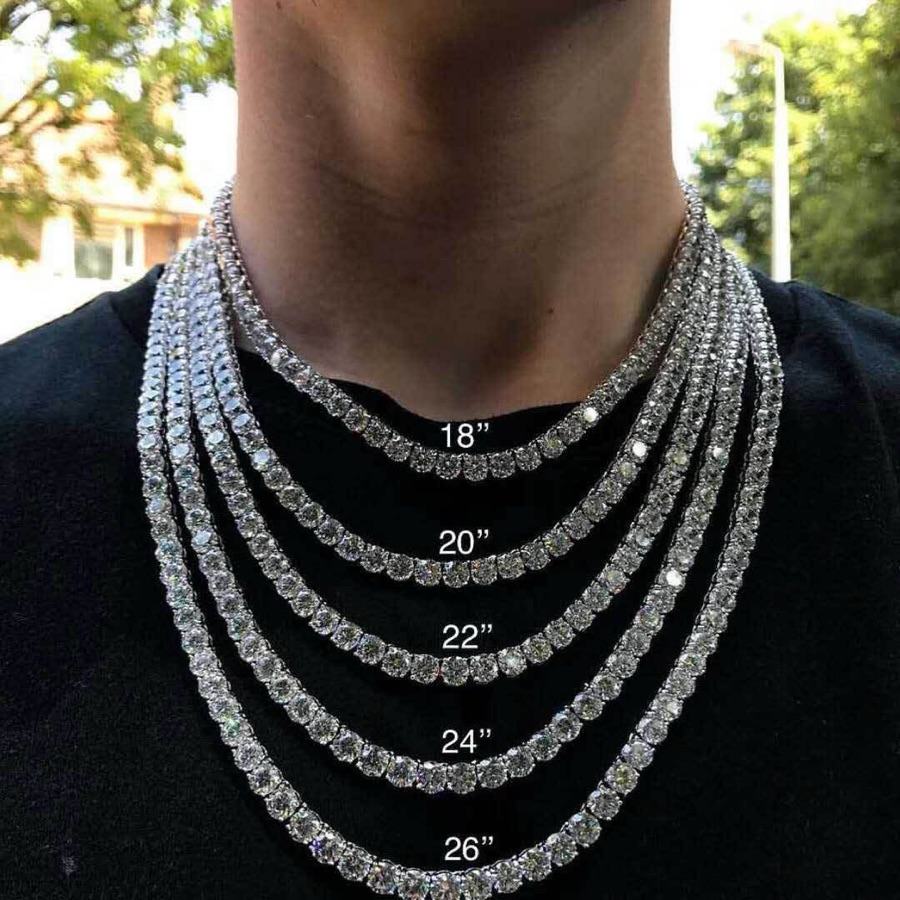
A pendant should hang where it can be seen. On a short chain it sits at the collarbone; on a longer one it drops to the upper chest, which gives a large pendant more room. If you layer chains, put the pendant on the longest one so nothing lies across it. See how to choose a chain length to measure before you order.
Is a name pendant worth it?
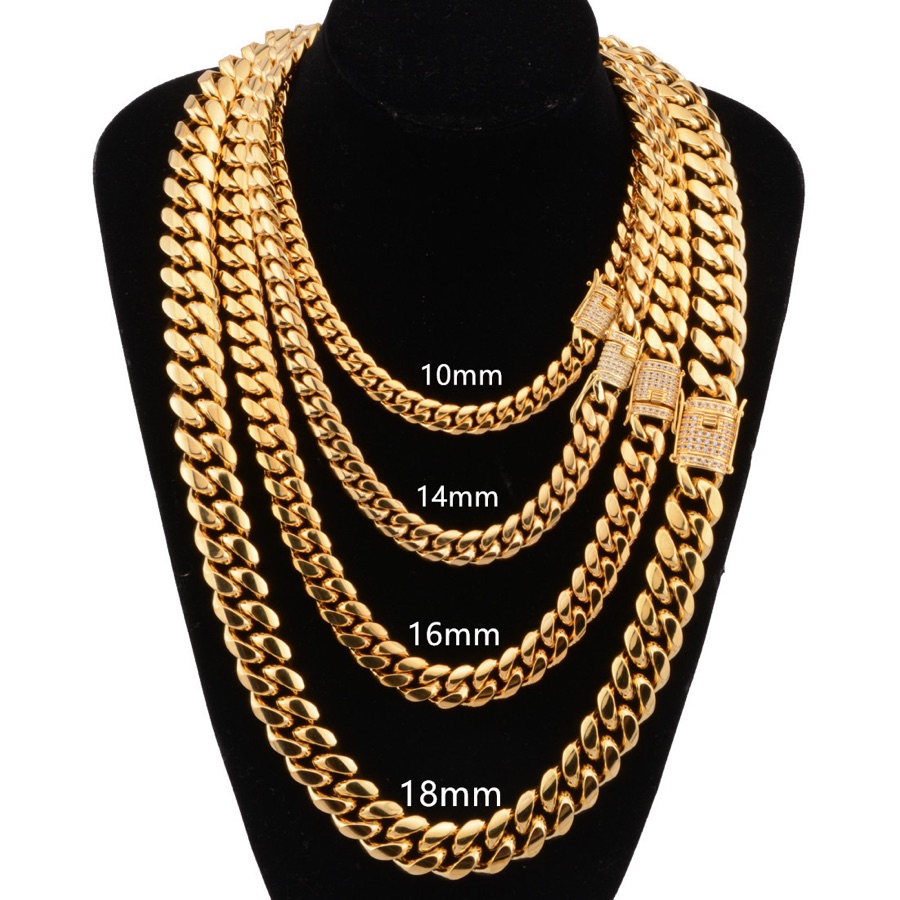
A name or letter pendant is made to order with the exact text you type when you order. That makes it personal, but it also means you should check the spelling carefully before you pay. Our Double-Layer Name Pendant is one example, with the option of a rope or Cuban chain.
A quick way to decide
- Everyday, simple: a plain cross on its own chain.
- Statement piece: a stone-set cross or symbol on a plain chain.
- Personal: a made-to-order name or letter pendant.
Then check the bail, the weight and the length. Browse all our pendants to compare shapes and sizes.